

Resource library
Guidance for the parts of this that nobody prepares you for
A growing library of plain-language guides written for families and caregivers, not for clinicians. Every guide opens with the short version, then explains what to expect, what to ask, and what to do next, with its sources and the month it was last revised.
17 guides · 7 topics · Revised November 2026
Topic
What you need
17 guides in the library
Common searches
Start here
If you are at the beginning
Three guides in the order most families need them. Read one, or read all three.
- 01Before the first call
How to Prepare for Hospice: A Practical Checklist
What to gather, what to set up at home, and what to ask before care begins, so the first week is calmer than it would be otherwise.
Read the guide - 02Before you choose
How to Choose a Hospice Provider: Questions Worth Asking
What to compare between hospices, which answers signal a well-run program, and the promises nobody can honestly make.
Read the guide - 03Before the conversation
Talking With a Loved One About Hospice
How to raise the subject without triggering fear, what to say when they refuse to discuss it, and how to handle disagreement in the family.
Read the guide
Browse
Organized by what you are facing
Each topic collects its guides in one place, so nothing gets buried as the library grows.
- 2 guides
Preparing for hospice
Paperwork, the home, and the first week.
- 1 guide
Choosing a hospice provider
What to compare before you sign.
- 2 guides
Talking about hospice
How to raise it, and what to say.
- 2 guides
Caring at home
Exhaustion, respite, and asking for help.
- 6 guides
Hospice by illness
Dementia, heart failure, cancer, COPD, ALS, kidney disease.
- 2 guides
The final days
What happens, and what helps.
- 2 guides
Grief and the weeks after
The weeks after a death.
Newest guides
Added most recently, revised as sources change


Grief9 min read
The First Hours After a Death at Home
Practical steps for families when a death occurs at home. This guide explains who to call, how to handle the room, and what a hospice nurse will do to help you.

Communication9 min read
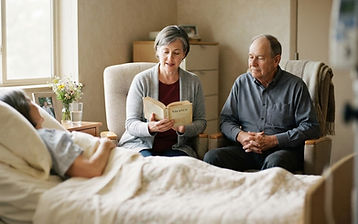
What to Say When You Visit Someone in Hospice
This guide covers practical etiquette for visiting loved ones in hospice, including how to manage your time, what to say, and how to support the primary caregiver during your short visit.


Caregiving9 min read
When You Are the Only Caregiver
Practical steps for solo caregivers to manage home hospice care, build a support network, ask for hospice help, and let go of unnecessary tasks during a difficult time.
How these are written
These guides draw on published guidance from Medicare, the Centers for Medicare & Medicaid Services, and the National Institute on Aging. Each one lists its sources and the month it was last revised. They are general education, not medical advice, and they do not describe what a particular provider offers. New guides are added regularly, and corrections are welcome.
Reading helps. Talking helps more.
If something you read here matches what you are seeing at home, call and describe it. A nurse can help you think through whether an evaluation is worth arranging.
Call us at (818) 351-5250