

It is also treatable, but only if you name it and ask for specific things.
The short version
- Two or three signs of depletion together mean the plan has to change, not that you should try harder.
- Hospice adds scheduled nursing, aide visits, social work, chaplaincy, volunteers, and up to five days of respite care per benefit period. It is not round-the-clock bedside care.
- Ask for specific help with a day and a time attached. “Let me know if you need anything” is not help.
In this guide
01
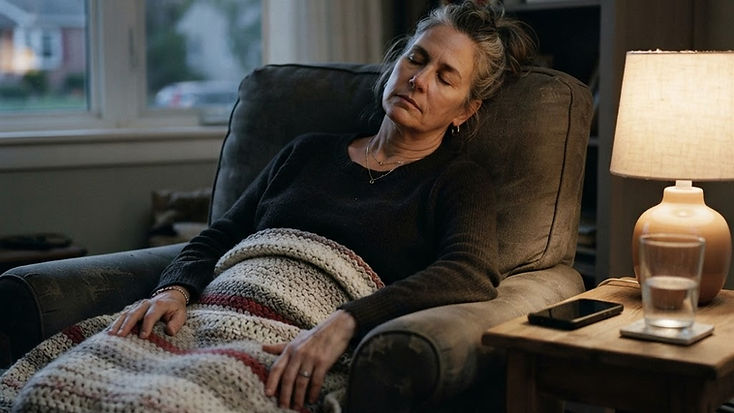
Signs you are past tired
- You are short-tempered with the person you are caring for, then ashamed of it.
- You cannot remember the last time you left the house for something other than an errand.
- You are skipping your own medications, appointments, or meals.
- You feel numb, or you cry at things that would not normally affect you.
- You are drinking more, sleeping badly, or dreading the sound of the bedroom monitor.
Two or three of these together is a signal to change something, not to try harder.
02
What hospice actually adds to the household
Hospice does not provide round-the-clock bedside caregiving. It provides a team that visits on a schedule, manages symptoms, teaches you what to do, and is reachable by phone at any hour. Specifically:
- A registered nurse who develops the care plan and visits regularly, more often as things change.
- A home health aide for personal care such as bathing, a limited number of visits per week.
- A social worker who can help with family conflict, resources, and planning.
- A chaplain for spiritual support, if wanted.
- Trained volunteers for companionship and caregiver respite, where the program has them.
- Short-term respite care: an inpatient stay of up to five days, once per benefit period, to give the family a break.
Ask each provider what their aide hours and volunteer program actually look like. The benefit allows for these services; the specific hours vary by agency.
03
Asking for specific help
“Let me know if you need anything” is not help. Specific requests get answered:
- “Can you take Thursday evenings so I can sleep through the night once a week?”
- “Can you sit with Dad for two hours on Saturday so I can leave the house?”
- “Can you call the pharmacy and sort out the refill?”
- “Can you be the one who tells the cousins what is happening, so I am not repeating it?”
Write the requests down and hand them to people. Most family members want to help and genuinely do not know what would be useful.
04
The minimum you need to protect
Sleep, food, movement, and one hour a week that is not about caregiving. These are not luxuries; they are what makes you able to keep going. If you cannot get them at home, respite care exists for exactly this reason.
And if you find yourself thinking that you cannot continue, tell the nurse or social worker that sentence exactly. They will not judge you, and they have heard it before.
Common questions
Does Medicare pay for someone to stay with my parent so I can work?
Not for ongoing attendant care. Medicare hospice covers intermittent visits and short-term respite care of up to five consecutive days per benefit period. Long-term in-home attendant care is generally private pay, though Medi-Cal has programs for eligible people.
Can hospice increase visits if things get worse?
Yes. Visit frequency is based on the patient’s condition and changes as needs change. If you feel visits are not frequent enough, say so directly and ask for a reassessment.
I feel resentful. Does that mean I am a bad caregiver?
No. Resentment is a common response to an unsustainable load, especially when you have given up work, sleep, and privacy. It is worth talking about with the hospice social worker.
Related reading


Preparing for hospice
How to Prepare for Hospice: A Practical Checklist
What to gather, what to set up at home, and what to ask before care begins, so the first week is calmer than it would be otherwise.
7 min read


End of life
What to Expect in the Final Days of Life
The physical changes that usually happen, what helps, what does not help, and who to call when you are unsure.
8 min read


Grief
The First Weeks After a Death
The practical tasks nobody mentions, what grief actually feels like, and how to know when to ask for more help.
6 min read